
About Us
History of Portsmouth Housing Authority
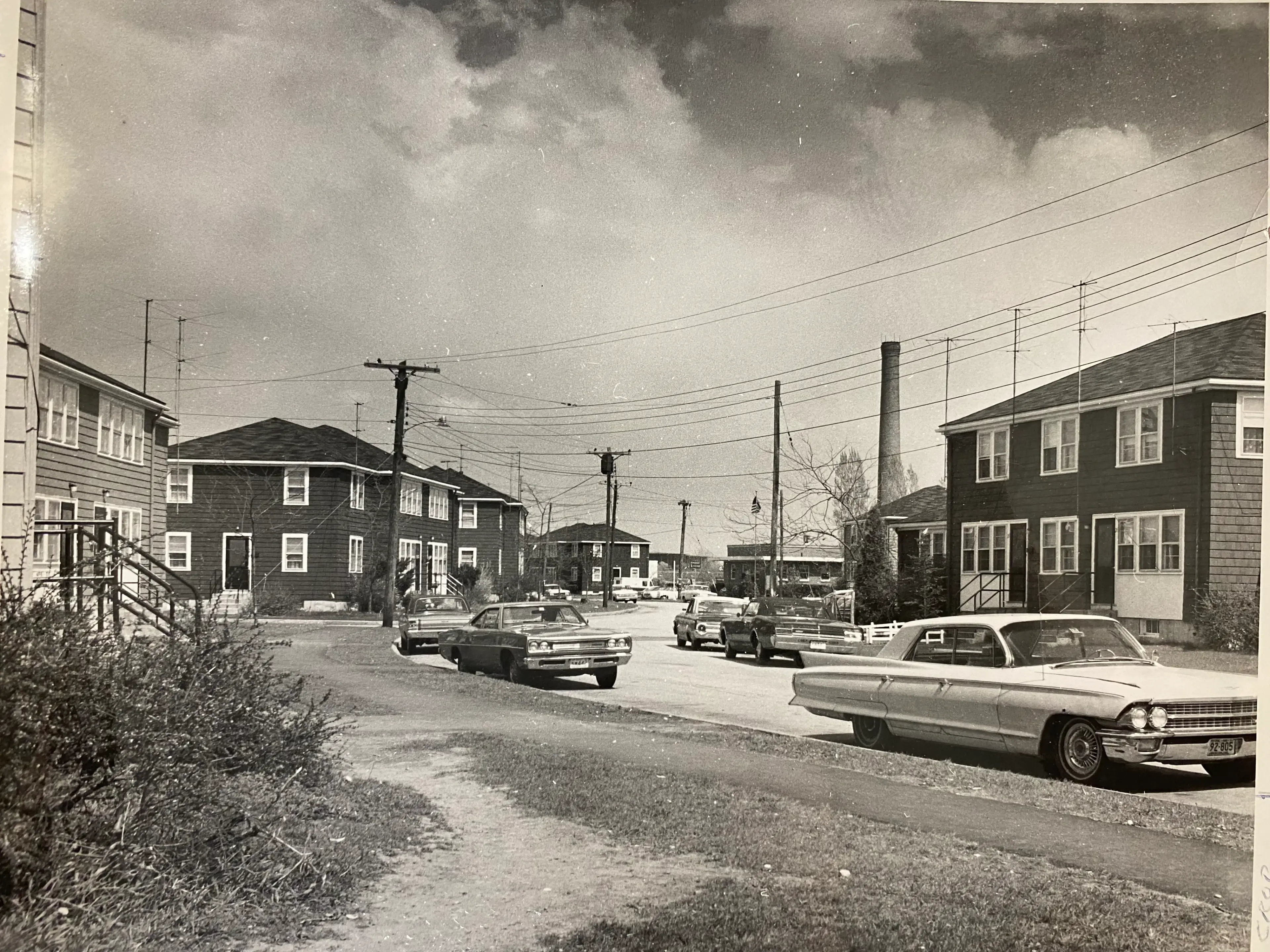
In the early 1950s, the City of Portsmouth experienced a surge in population and economic activity with the rapid expansion of Pease Air Force Base, which was selected in 1951 for development as a Strategic Air Command installation. Pease grew into a 4,100-acre complex employing about 10,000 military and civilian personnel within a few years, straining local housing capacity. Anticipating the need for affordable housing, city officials established the Portsmouth Housing Authority in 19521 with a mission to ensure “decent, safe, and sanitary” housing for the community. This reflected a broader national effort launched under President Franklin D. Roosevelt’s United States Housing Act of 1937 (the Wagner–Steagall Act), which created the country’s first public housing program as part of the New Deal1. The 1937 Act established the U.S. Housing Authority (USHA) to finance local housing agencies and initially provided $500 million in loans for low-cost housing construction nationwide2. Subsequent federal legislation deepened the government’s role: the Housing Act of 1949 (enacted under President Harry S. Truman’s Fair Deal) set a national goal of “a decent home and a suitable living environment for every American,” authorized slum-clearance and urban redevelopment projects, and provided for the construction of up to 810,000 new public housing units3. In 1965, as part of President Lyndon B. Johnson’s Great Society, the U.S. Department of Housing and Urban Development (HUD) was created to coordinate federal housing programs – consolidating agencies such as the Federal Housing Administration, Public Housing Administration, and Urban Renewal Administration into a Cabinet-level department4.
Early PHA Developments (1950s–1960s): Gosling Meadows and Senior Housing – In its first decade, the Portsmouth Housing Authority concentrated on developing publicly assisted housing for families and seniors. PHA’s first project, Gosling Meadows, was built in 1958–59 near the Portsmouth–Newington town line (close to Pease Air Force Base). Comprising 124 garden-apartment units, Gosling Meadows opened in 19595, providing safe and affordable family housing for Portsmouth’s working-class residents and military families. PHA also offered on-site community programs and by 1975 had opened a recreation center there to provide youth activities and support services. In 1962, PHA added its first senior citizen housing developments. Recognizing a lack of affordable apartments for the elderly, PHA constructed a total of 60 senior units spread across three small sites in the city – at Woodbury Avenue (the Creek neighborhood), State Street (West End), and Pleasant Street (South End). These allowed Portsmouth’s older residents to remain in the community in modern, low-rent apartments designed for their needs.
The federal approach to subsidized housing evolved during this era. In 1968, PHA joined the Section 23 Leased Housing program – an early initiative in which the authority leased 25 privately owned units (mostly in the Atlantic Heights area) and sublet them at reduced rent to low-income tenants. Section 23 was the precursor to today’s Section 8 Housing Choice Voucher program. By the 1970s, Section 23 had transitioned into Section 8, in which qualified tenants receive rent vouchers for use on the private market. PHA’s voucher program has since grown to provide nearly $5 million in rent subsidies annually to local landlords, assisting more than 460 households (over 750 people) in the Portsmouth area as of the early 2020s.
Portsmouth and the Urban Renewal Era (1960s–1970s) – In the late 1950s and 1960s, Portsmouth embraced federally funded Urban Renewal programs to address deteriorating downtown neighborhoods. The term “urban renewal” was introduced by the Housing Act of 1954 to describe efforts not just to clear slums but to rehabilitate and revitalize aging urban areas5. Under the federal program, cities could obtain two-thirds of project costs from Washington (with the city covering the rest) to acquire “blighted” areas, clear substandard structures, and prepare sites for new development6. Portsmouth designated PHA as the city’s official urban renewal agency, expanding PHA’s role from housing into broader redevelopment planning7. With PHA in charge, the city secured approval and funds for multiple projects. The largest were the Marcy Street Urban Renewal Project (focused on the South End waterfront and neighborhood) and the Vaughan Street Urban Renewal Project (targeting the North End neighborhood)7. Smaller urban renewal-funded initiatives included an expansion of the Portsmouth Public Library (completed in 1967), renovations to Old City Hall on Daniel Street (which updated the historic council chambers), construction of the High–Hanover Parking Garage (the city’s first multi-level parking structure), and support for restoration of the iconic Franklin Block on Congress Street7.
Like many communities, Portsmouth experienced both benefits and controversies from urban renewal. Some credit these projects with revitalizing infrastructure and stimulating economic growth, while others lament the loss of homes and historic fabric. Even decades later, urban renewal remains an emotionally charged subject in Portsmouth, as in much of the country8.
The Marcy Street Urban Renewal Project in the South End aimed to rejuvenate a run-down waterfront and its environs. That area – centered on Puddle Dock and Marcy Street – had been officially declared “blighted” and initially slated for wholesale clearance and construction of new housing. However, a historic preservation movement coalesced just in time. In June 1957, city librarian Dorothy M. Vaughan delivered a rousing speech to the Portsmouth Rotary Club, warning that the city was “selling its soul” by sacrificing its colonial heritage to modernization. Her call to action helped galvanize local preservationists9. Encouraged by Vaughan’s plea, citizens formed groups (like the Portsmouth Advocates) determined to save the old Puddle Dock neighborhood from a complete teardown. The result was a pioneering compromise that blended urban renewal with historic preservation. Rather than bulldozing all the South End’s dilapidated buildings, a non-profit entity named Strawbery Banke, Inc. was formed in 1958 to preserve a cluster of early houses and create an outdoor history museum10. Federal urban renewal funds were used to acquire and clear selected properties around Puddle Dock, but 27 historic houses were salvaged and restored on their original sites, forming the core of what opened in 1965 as Strawbery Banke Museum. Named after Portsmouth’s 17th-century settlement, the museum grew into a 10-acre campus and became a nationally recognized heritage attraction – a catalyst for the South End’s preservation9. Concurrently, the city leveraged a trust fund bequeathed by sisters Josie and Mary Prescott to convert the adjacent industrial waterfront into Prescott Park, a public garden and performance space. Using the Prescott Trust (established by the sisters’ wills in 1949 and 1954) and federal aid, Portsmouth demolished old wharves and fish warehouses along Marcy Street; by the mid-1970s, Prescott Park had blossomed into a nearly 10-acre riverfront park that residents and visitors continue to enjoy today11.
Portsmouth’s largest urban renewal effort took place in the North End – an area historically home to a vibrant Italian-American community often nicknamed “Little Italy.” The Vaughan Street Urban Renewal Project, conceived in the mid-1960s, targeted a dense 50-acre neighborhood near Deer, Russell, and Bridge Streets. From 1968 into the early 1970s, this neighborhood was almost entirely razed: approximately 400 buildings (including nearly 200 residential structures along with shops, churches, and social clubs) were acquired via eminent domain and demolished12. Generations of North End families were displaced, and many small businesses vanished. Even as it cleared the neighborhood, PHA and local preservationists tried to save a piece of its architectural heritage. Thirteen of the most significant 18th- and 19th-century houses were spared demolition, moved slightly to cluster on a rise along Deer and High Streets. This enclave became known as “The Hill,” and was later placed on the National Register of Historic Places12. The rest of the North End gave way to empty lots and a few scattered public buildings. Local officials hoped to attract private investment to revitalize the area. Plans were floated for a modern downtown complex – including a motor inn of roughly 100 rooms with shops and a conference center – but initial proposals fell through. Ultimately, in the mid-1980s PHA succeeded in recruiting the Sheraton Corporation to build a major hotel on the site. The Sheraton Portsmouth Harborside Hotel, a full-service hotel and conference facility with 194 guest rooms, opened in 1988 as the anchor of the North End redevelopment14. While the hotel and subsequent office buildings (like the Parade Office Mall) eventually spurred renewed economic activity downtown, many Portsmouth residents still view the North End renewal as a cautionary tale of progress at too high a cost.
Public Housing Expansions and the End of an Era (1968–1970s) – As urban renewal displaced hundreds of residents, PHA worked to mitigate the human toll by providing new housing for those of modest means. In 1970, PHA opened the Feaster Apartments, a 100-unit high-rise apartment building on Court Street that provided affordable one- and two-bedroom units for seniors and people with disabilities. The building was initially to be named after Reverend John N. Feaster, a well-known Portsmouth clergyman who had ministered at North Church for 27 years. Rev. Feaster, however, gave up that honor and insisted the building be named for his son, William “Bill” Feaster, a Portsmouth native and U.S. Army chaplain who was killed in the Vietnam War in 196613. A few years later, in 1973, PHA completed the 11-story Margeson Apartments on Middle Street, adding 137 units of senior housing (named after Richard N. Margeson, a former Portsmouth mayor). These two federally funded projects significantly expanded the city’s supply of low-income housing for the elderly, including many who had been uprooted by urban renewal. Not long after Margeson opened, however, the era of traditional public housing construction came to an abrupt close. In mid-1973, President Richard Nixon imposed a moratorium on new federal housing programs – putting a permanent halt to additional public housing development15. Thereafter, Portsmouth (like other communities) had to rely on alternative tools and public-private partnerships to create affordable housing.
Unable to add more public housing after 1973, PHA turned to creative strategies to preserve and expand affordable units. In the late 1970s, PHA formed a non-profit affiliate (the PHA Housing Corporation) to acquire and manage properties outside the HUD public housing program. Under this model, PHA in 1978 acquired the foreclosed Ridgewood Apartments – a then five-year-old, 100-unit private apartment complex on Greenleaf Avenue – in order to keep it affordable for Portsmouth families. The property remained in operation under PHA’s affiliate, paying local property taxes. By the late 2000s, however, the aging complex needed major reinvestment. PHA assembled a financing package that included Low-Income Housing Tax Credits (LIHTC), city Community Development Block Grant funds, state housing loans, and HUD project-based vouchers to overhaul Ridgewood completely. The fully rehabbed complex reopened in 2011 under a new name, Wamesit Place (a Native American term meaning “a place for all”)5. The LIHTC program – created by Congress in 1986 and championed by Senator George J. Mitchell of Maine – had by then become the nation’s primary engine for affordable housing production16, and PHA would continue to utilize it for future projects.
PHA also broadened its mission beyond housing into social services starting in the 1970s. The agency recognized that “bricks and mortar are not the total answer” to residents’ needs. In 1973, PHA launched a Retired and Senior Volunteer Program (RSVP) for Rockingham County, which grew into the largest RSVP in New England. The program engaged hundreds of older volunteers in service at schools, libraries, hospitals, and local charities, built on the idea that everyone has a talent to contribute. PHA also established a congregate meals program for seniors and people with disabilities, which at its peak operated three dining sites (at Margeson Apartments, the Senior Center, and an adult day care center) and served over 100 meals daily in partnership with the Rockingham County Meals on Wheels. In 1974, PHA opened a new Senior Citizens Center in the historic Henry Sherburne House on Deer Street downtown, offering health clinics, meals, exercise classes, bingo, crafts, and other daily activities for older residents. A Senior Transportation Program run from the center dispatched two wheelchair-accessible vans (via radio dispatch) to provide Portsmouth’s elderly and disabled with rides to medical appointments, shopping, and other essential errands on a daily basis. In the late 1980s, PHA even pioneered one of New Hampshire’s first respite care programs for people with Alzheimer’s and other dementias – initially funded by the Foundation for Seacoast Health. When that respite program quickly outgrew PHA’s capacity, the Visiting Nurses Association took over operations (with PHA providing space and utilities) until it relocated to a larger facility.
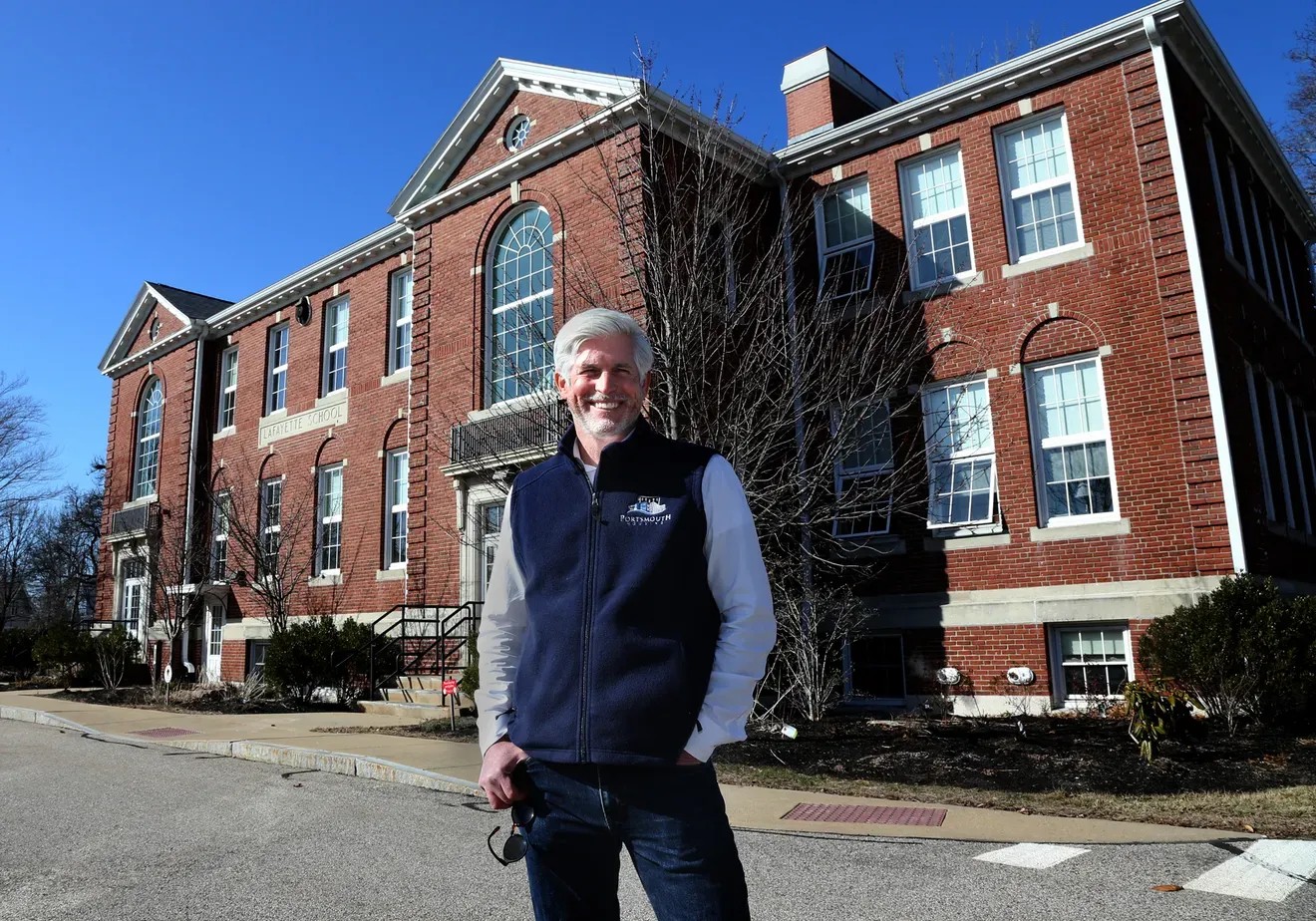
Portsmouth Housing in the Modern Era (1980s–2010s) – After the federal public housing pipeline shut down, PHA increasingly partnered with local government and leveraged new financing programs to keep developing affordable units. Notably, the 1986 introduction of LIHTCs spurred PHA in 1988 to establish another non-profit arm (PHA Housing Development Ltd.), which could serve as a development entity for tax-credit projects beyond traditional public housing. In the 1990s and 2000s, the combined efforts of Portsmouth Housing Authority and its affiliates (collectively known as “Portsmouth Housing”) resulted in several innovative housing developments: the Atlantic Heights School (a historic 1905 building converted into 30 apartments for seniors in 1996, using the first allocation of LIHTCs in New Hampshire16), Connors Cottage (the adaptive reuse of the long-abandoned 1884 Cottage Hospital next to City Hall, transformed in 2003 into 20 units of senior housing and named for Timothy J. Connors – former Mayor of Portsmouth and PHA’s Executive Director for over 30 years), and the Lafayette School (a 1921 former school on Lafayette Road that PHA redeveloped into 10 senior apartments in 2010, preserving original features like chalkboards and doors). In each case, PHA secured layers of public and private funding, from tax credits and historic preservation grants to city and state loans, demonstrating its agility in the post-public-housing era.
Entering the 21st century, PHA has continued to evolve. In 2013, Portsmouth Housing Authority partnered with the Portsmouth School Department to launch the “Making Classroom and Community Connections (MC3)” afterschool program at a local elementary school, funded by a 21st Century Community Learning Center grant. MC3 provides hands-on enrichment, arts, recreation, and daily tutoring for low-income students, and includes a summer camp at Gosling Meadows. In 2016–2017, PHA undertook a comprehensive Strategic Plan to guide the agency’s priorities, emphasizing resident quality of life, robust partnerships with service providers, operational excellence, and the preservation and expansion of Portsmouth’s affordable housing stock.
Portsmouth Housing Authority Today – As of the mid-2010s, Portsmouth Housing Authority owns or manages over 1,000 rental apartments across the city, providing homes to more than 1,700 people. In this capacity, PHA is recognized as a critical piece of Portsmouth’s civic infrastructure and social safety net. The agency’s history – from building its first family development in 1959 to navigating the urban renewal upheavals of the 1960s and innovating with non-profit partnerships and tax credits in later decades – reflects both the challenges and the possibilities in making housing affordable. Through it all, PHA’s core belief remains unchanged: stable, affordable housing is the foundation that enables individuals and families to pursue their goals. The Portsmouth Housing Authority is proud of its ongoing role in helping ensure that Portsmouth remains a community with a place for people of all income levels.
Endnotes
- Portsmouth Housing Authority was established in 1952 (chartered by the City of Portsmouth). See United States Housing Act of 1937, Pub. L. 75 412, 50 Stat. 888 (effective Sept. 1, 1937) (declaring it U.S. policy “to remedy the unsafe and unsanitary housing conditions and the acute shortage of decent, safe, and sanitary dwellings for families of low income” and to assist local housing agencies to provide such housing).
- The 1937 Wagner–Steagall Act created the United States Housing Authority (USHA) with an initial authorization of $500 million in loans for low-cost housing projects. See Harvey Smith, “Modern Housing,” Reinventing Home (2020); Living New Deal, “United States Housing Act (1937).”
- The Housing Act of 1949 (Title I, Urban Redevelopment) launched the federal urban renewal program and set a target of 810,000 new public housing units. See Charles Orlebeke, “The Evolution of Low-Income Housing Policy, 1949–1999,” Housing Policy Debate 11, no. 2 (2000): 489–520.
- The U.S. Department of Housing and Urban Development (HUD) was established in 1965 by the Housing and Urban Development Act, consolidating the FHA, Public Housing Administration, FNMA (Fannie Mae), Urban Renewal Administration, and others into a Cabinet department. See HUD Archives, “A Brief History of HUD.”
- The Housing Act of 1954 amended the 1949 Act and introduced the term “urban renewal” for comprehensive neighborhood revitalization (with a shift toward rehabilitation of deteriorating areas, not just clearance). See HUD User, “The 1950s”; Colby College, “How Urban Renewal Worked.”
- Federally funded Urban Renewal projects required a local public agency to execute plans; the U.S. government covered two-thirds of approved project costs (grants) while localities paid one-third. The premise was that removing blight and rebuilding modern infrastructure would revive city economies. See J. Dennis Robinson, “Urban Renewal Evicts Little Italy,” SeacoastNH.com (1999/2005); Colby College, “How Urban Renewal Worked.”
- Portsmouth Urban Renewal Projects – In the 1960s, Portsmouth secured federal funding for multiple projects via PHA: the Marcy Street (South End) and Vaughan Street (North End) clearance projects, expansion of the public library, renovation of Old City Hall, the High–Hanover parking garage, restoration aid for the Franklin Block, etc. Source: Ted Connors (Executive Director, PHA), “History of the Portsmouth Housing Authority,” memorandum to PHA Board, July 18, 1995 (Portsmouth Athenaeum).
- Controversy of Urban Renewal – Nationwide, urban renewal (1949–1974) displaced many communities and is widely criticized as a failed or damaging policy despite some public benefits. In Portsmouth, the North End clearance uprooted generations and remains sensitive even 50 years later, though projects like Strawbery Banke and Prescott Park are seen as positive legacies. See J. Dennis Robinson, “Urban Renewal Evicts Little Italy,” SeacoastNH.com (1999/2005); Colby College, “How Urban Renewal Worked.”
- Dorothy Vaughan’s 1957 Speech – Portsmouth librarian Dorothy M. Vaughan’s June 20, 1957 Rotary Club speech decried the destruction of historic buildings in the South End and helped spark the preservation effort that led to Strawbery Banke Museum. See J. Dennis Robinson, “Who Really Started Strawbery Banke Museum?” SeacoastHistory.com (2023).
- Strawbery Banke Museum (1958–1965) – Strawbery Banke, Inc. was incorporated in November 1958 as a non-profit to preserve Portsmouth’s original waterfront neighborhood. With federal urban renewal assistance, 27 houses were saved and restored as a “living history” museum, which opened in 1965 and has since expanded to ~10 acres. Source: Strawbery Banke Museum archives; Portsmouth Herald reports (1958–1965).
- Prescott Park and the Prescott Trust – Sisters Josie and Mary Prescott purchased Portsmouth’s rundown waterfront in the 1930s. Josie’s will (probated 1954) left the land and $500,000 to create a free public park. Using the Prescott Trust and urban renewal funds, Portsmouth cleared the old wharves and established Prescott Park by 1974. See City of Portsmouth, “History of Prescott Park.”
- North End Clearance and “The Hill” – The Vaughan Street Urban Renewal Project (ca. 1968–1973) in Portsmouth’s North End removed roughly 400 buildings (nearly 200 homes) and displaced an entire neighborhood. To salvage some heritage, 13 of the oldest houses were relocated to form “The Hill”, later listed on the National Register of Historic Places. Source: J. Dennis Robinson, “Urban Renewal Evicts Little Italy,” SeacoastNH.com (1999/2005); Ted Connors, “History of the Portsmouth Housing Authority,” 1995.
- Naming of Feaster Apartments (1970). PHA’s Feaster Apartments was named in honor of William N. “Bill” Feaster (1938–1966), a Portsmouth native and U.S. Army chaplain who died in the Vietnam War. Bill’s father, Rev. John N. Feaster, was the beloved 27-year pastor of Portsmouth’s North Congregational Church. He requested that the new senior housing high-rise be named for his son rather than himself. Source: Lucinda Feaster Yeaton & Patience G. Horton, “Celebrating the Feaster Family on the 50th Anniversary of Feaster Apartments,” Portsmouth Herald, Oct. 13, 2020.
- Sheraton Portsmouth Harborside Hotel (1988). Plans to redevelop Portsmouth’s North End into a commercial complex only materialized decades later. The Sheraton Portsmouth Harborside Hotel (approx. 194 rooms) finally opened in 1988 with public support, providing an economic boost to the downtown. Sources: Travel Weekly, “Sheraton Portsmouth Harborside Hotel” (hotel profile, accessed 2026); Erich Baum, “Portsmouth, NH…Shows Promise for Future,” HVS Market Report, Apr. 19, 2023.
- 1973 Federal Housing Moratorium. In June 1973, the Nixon Administration suspended all federal housing subsidy programs – including new public housing construction – effectively ending the expansion of traditional public housing. See Ife Vanable, “Working the Middle,” The Avery Review no. 30 (2018).
- Low-Income Housing Tax Credit (LIHTC, 1986). The LIHTC was established by the Tax Reform Act of 1986, largely drafted by Sen. George J. Mitchell (D-Maine), to incentivize private investment in affordable housing. The LIHTC program has since financed over 3 million affordable units nationally. See Eric Wong, “Mitchell Looks Back on LIHTC Success,” Affordable Housing Finance, June 1, 2006.
News

The Portsmouth Housing Authority (PHA) has developed its Annual PHA Plan and its Moving to Work Demonstration Program (MTW) Supplement to the Annual PHA Plan for Fiscal Year beginning January 1, 2027. The Annual Plan is required annually with the U.S. Department of Housing and Urban Development Office of Public and Indian Housing. The MTW Supplement to the Annual PHA Plan is required with the U.S. Department of Housing and Urban Development Office of Public and Indian Housing (HUD) for high performing Housing Authorities designated as MTW Agencies.
They are available for review and comment by contacting Executive Operations Manager Mary Bartlett at 603-957-2358 or mary.b@nh-pha.com. The PHA is open Monday 8:30 AM to 6:00 PM, Tuesday through Thursday 8:30AM to 4:30PM, and Friday 8:30 AM to 12 PM.
A public hearing will be held on Wednesday, October 14, 2026 at the Authority’s office at 2:00 PM, located at 245 Middle Street, Portsmouth, NH. Reach out to Mary Bartlett at 603-957-2358 or mary.b@nh-pha.com if you would like to call in to the meeting.
Questions and comments must be received by 2:30pm on October 14, 2026.
Regular Meeting Agenda
Wednesday, April 8, 2026 – 2:00 pm
Ruth Lewin Griffin Place
160 Court Street, Portsmouth, NH
Passcode: 091664
Meeting ID (to join by Zoom): 838 6434 6068
- Roll Call
- Reading and Approval of the Previous Meeting’s Minutes
- Public Comments
- Communications & Correspondence
- Executive Director’s Report
- Old Business
- Acceptance of LTD/PHA Development Services Agreement
- New Business
- Res. No. 2026-05: Authorization to Amend & Extend PBV HAP Contract - Atlantic Heights
- Operational Reports
- Adjournment


No, program participants will not be required to work. PHA will continue to encourage self-sufficiency through job training, education programs, and/or other activities that support economic self-sufficiency.
No, you will not be required to move.
PHA will hold public meetings to discuss the changes we intend to make to our existing polices to meet our MTW objectives. These meetings and accompanying documentation will be published on our website and all program participants, landlords and members of the public are invited and encouraged to attend.


No, program participants will not be required to work. PHA will continue to encourage self-sufficiency through job training, education programs, and/or other activities that support economic self-sufficiency.
No, you will not be required to move.
PHA will hold public meetings to discuss the changes we intend to make to our existing polices to meet our MTW objectives. These meetings and accompanying documentation will be published on our website and all program participants, landlords and members of the public are invited and encouraged to attend.
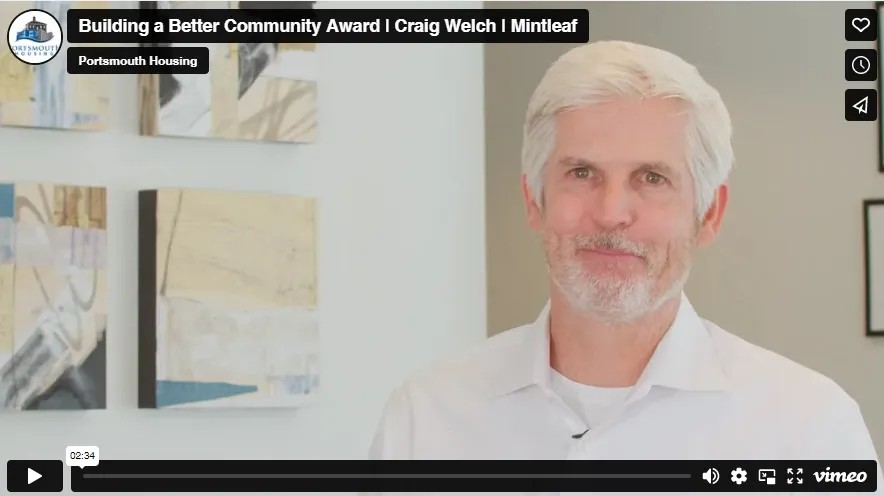
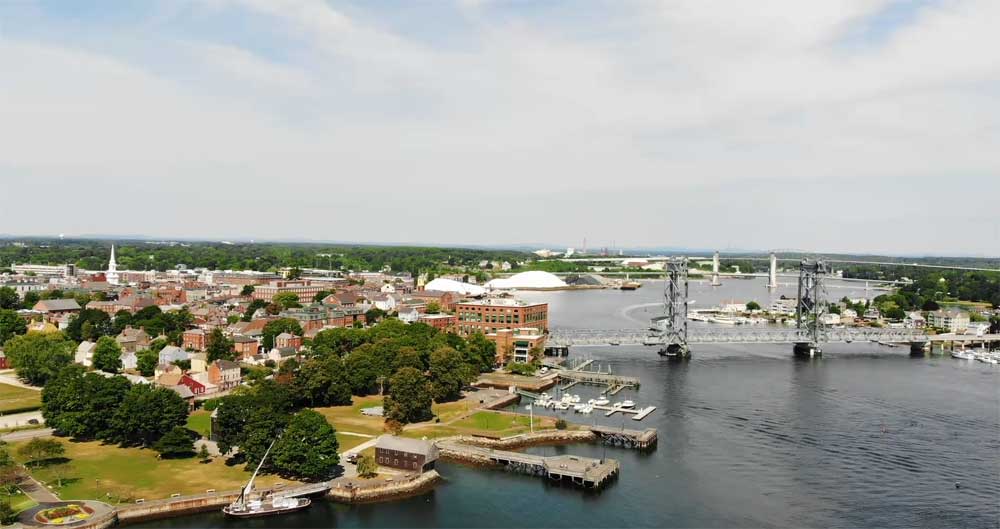
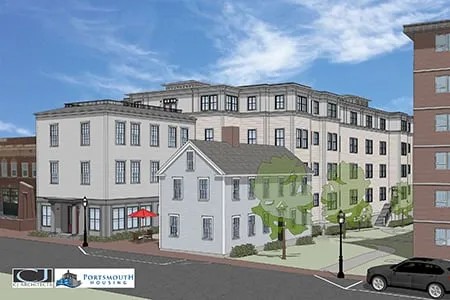
- Portsmouth affordable housing units on track to open in 2022 (seacoastonline.com)
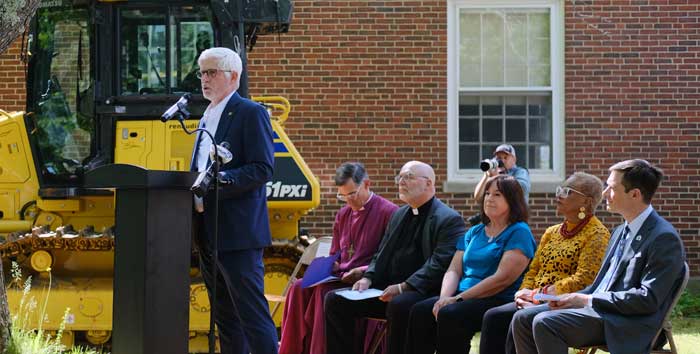
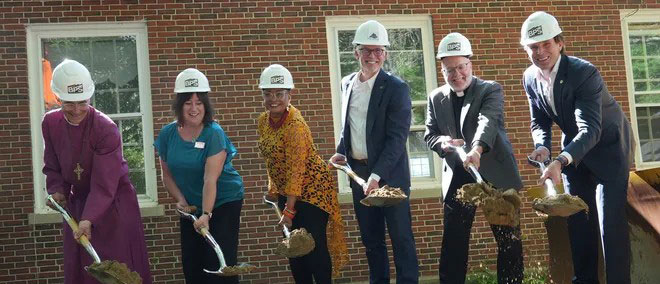
- Ruth Lewin Griffin Place groundbreaking in Portsmouth (seacoastonline.com)
- Portsmouth's new workforce housing to be named after Ruth Griffin (seacoastonline.com)
- 64-unit Portsmouth workforce housing project prep begins (seacoastonline.com)
- Portsmouth workforce housing on track to break ground in 2020 (seacoastonline.com)
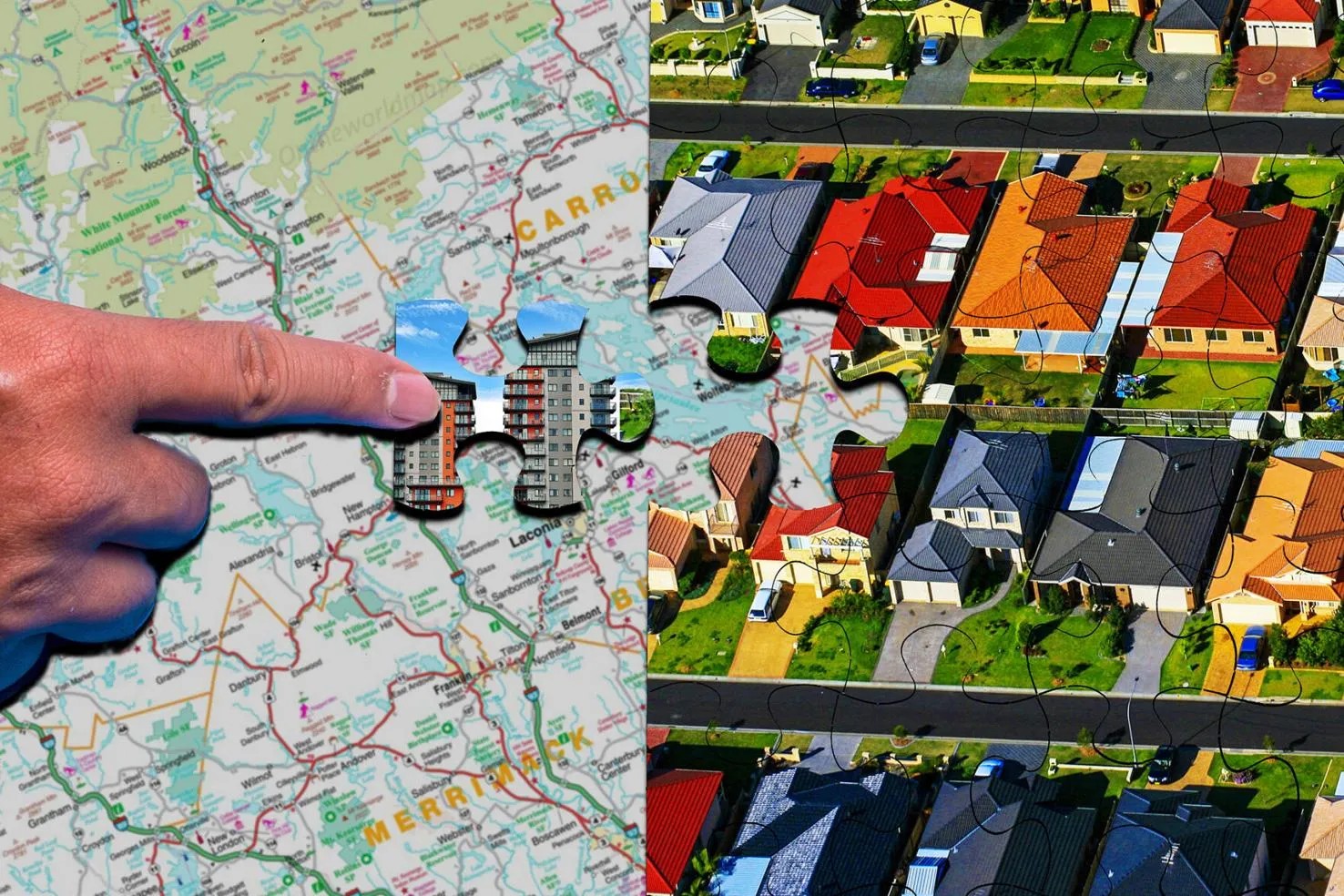
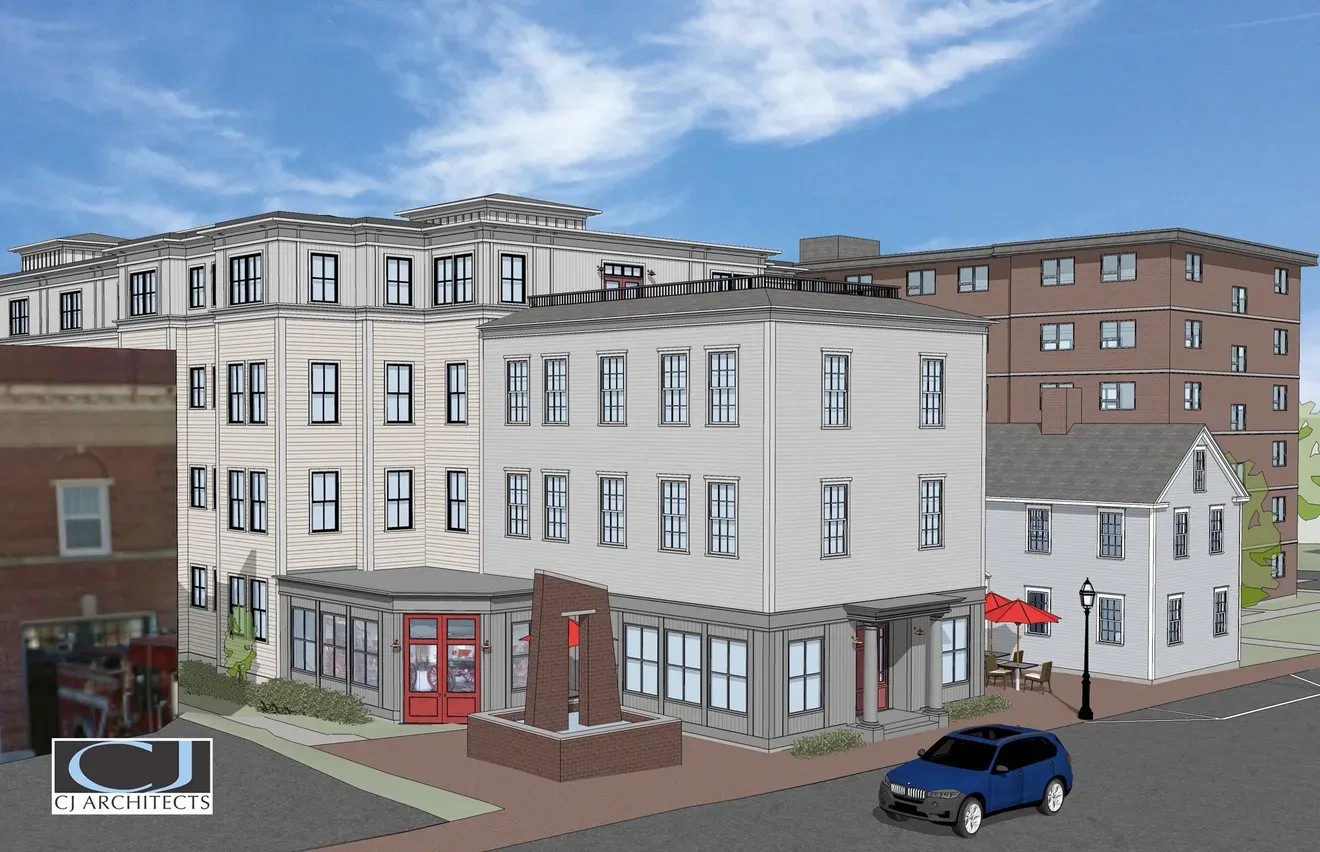
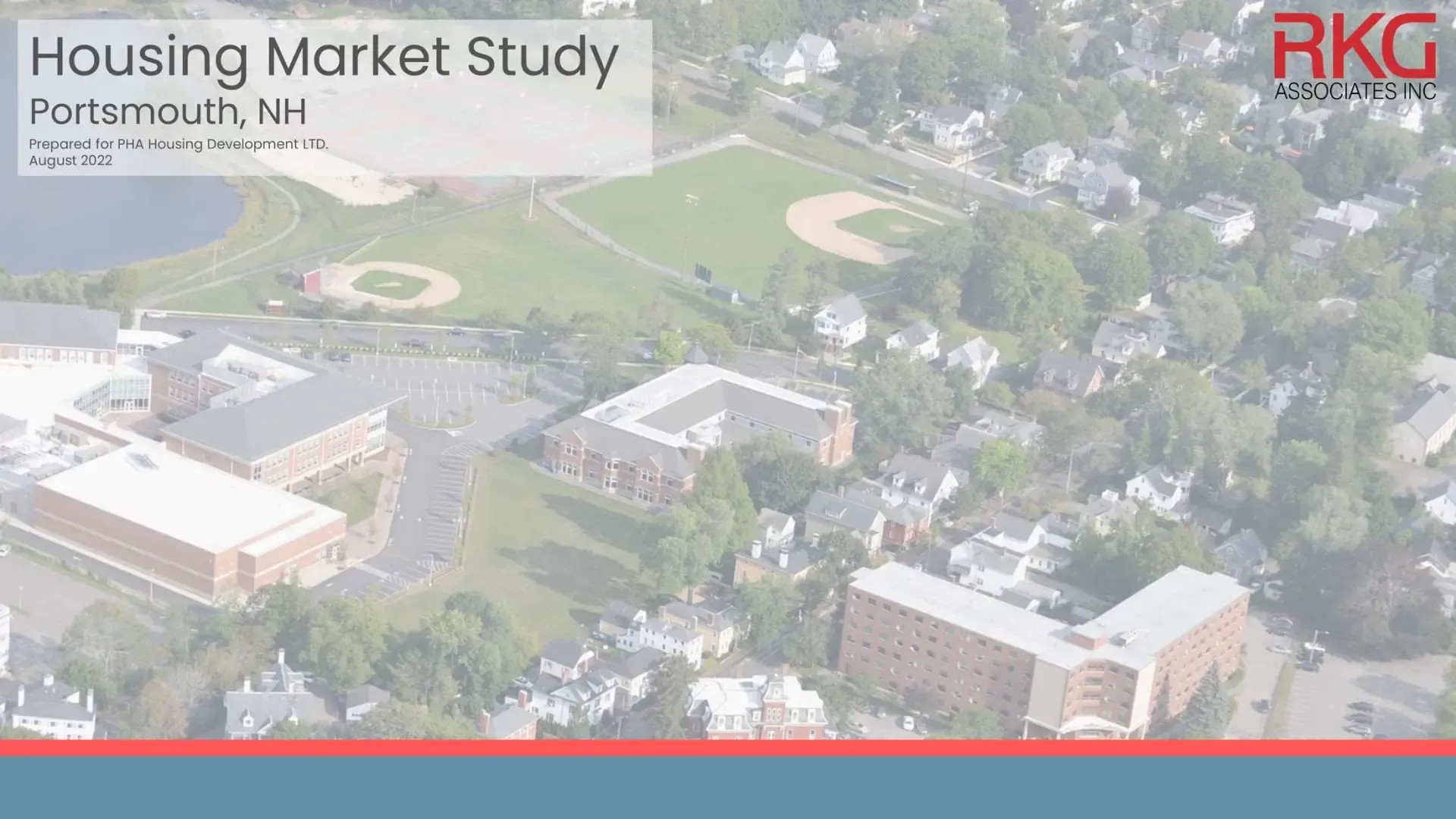
- More workforce housing, including family-sized units, are needed in Portsmouth.
- Renters in Portsmouth are increasingly cost burdened. Cost burdened is defined as households paying more than 30% of their income. Nearly 40% of Portsmouth renters are cost burdened and 15% of renters are extremely so, paying more than 50% of their income on rent. For Portsmouth workers living outside of the city, cost burdening is also increasing due to the high cost of commuting into the city.
- Most owned housing units in Portsmouth were constructed before 1960, meaning they may not be equipped with accessibility features older adults are looking for today.
- One in every three respondents to the Community Survey indicated their current residence does not meet their needs, half of whom cited high costs as a primary concern.
- Of those surveyed who used to live in Portsmouth but no longer do, 1/3 would like to move back to Portsmouth if they could find housing that met their needs.
- While a significant amount of rental housing has been built in recent years, the increase in housing supply has not offset the sharp rent increases in the city because demand continues to outpace supply. One conclusion this supports is that the City should incentivize developers who agree to cap the rents, most notably, local non-profit housing developers.
- According to the housing survey, many respondents indicated that limited public transit and biking options create challenges for existing residents and workers commuting into the city.
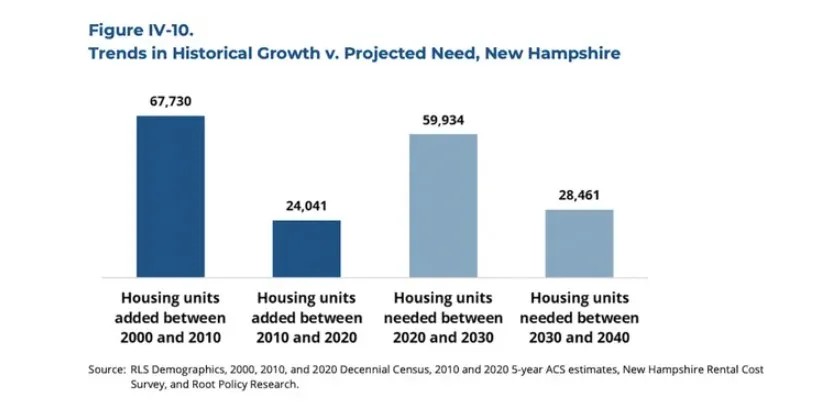
- Respond to the significant demand for workforce housing units for people making under 80% of the Area Median Income. According to the Market Study, 52% of the new housing unit demand projected by 2030 will come from households earning at or below 80% of AMI, and the majority of people surveyed who indicated there is a very strong need for workforce housing, low-income housing, and housing for people experiencing homelessness. The majority of those surveyed also indicated a strong need for housing that is affordable to those employed in retail, hospitality, food service, the creative economy, and municipal employees and first responders.
- Respond to the trend that Portsmouth household size is increasing, by building some larger, three-bedroom units, a segment of the market that has been underdeveloped by most private housing developers.
- Respond to the overall increase in older adults in Portsmouth, and to the Community Survey which had a large number stating their current home does not meet their accessibility needs but they don’t want to leave the city to find suitable housing.
- Respond to the data that shows that between 2020 and 2030, Portsmouth could see 489 affordable units lose federal subsidies and associated rental rate restrictions, putting these units at risk of moving to higher market rights. Preserving these units should be a priority for Portsmouth.